Trauma Therapy and Narrative Repair: Rewriting the Story
Every person carries a private narrative, a way of explaining who they are, what people are like, and how the world works. Trauma does not just injure the body or mind, it distorts that narrative. A car backfires, and the nervous system says gunfire. A raised voice, and the mind hears abandonment long before words arrive. Over time, the story tightens, drops nuance, and begins to predict danger even in quiet rooms. Narrative repair is the craft of loosening that grip, then rewriting meaning in a way that honors what happened while restoring choice, dignity, and connection.
I have spent years in trauma therapy rooms watching small changes accumulate. Panic attacks that once flared daily drift to once a week, then once a month. A couple who could not sit on the same couch slowly returns to Friday night tacos. Change rarely looks cinematic. It looks like regained mornings, fewer apologies, and the ability to walk past a mirror without bracing for impact.
What trauma does to the story
Trauma compresses time, so that the past can dominate the present. The nervous system does not catalog events in tidy chapters. It records threat across multiple channels: heart rate, breath, posture, attention, and memory. When danger floods the body, the brain does its best to keep you alive. It learns rules. Trust no one. Keep your back to the wall. Please everyone so you do not get hurt. These rules are efficient in crisis and costly in ordinary life. They narrow choices and damage relationships.
Language often follows the body. After traumatic experiences, people speak in absolutes. Always, never, no one, everyone. This is a tell. Absolute language signals that the story has been flattened to reduce uncertainty. It protects against surprise. It also blocks repair. A fuller story allows for exceptions, context, and self-compassion.
The second distortion is about identity. Instead of saying something bad happened to me, the story becomes I am the kind of person bad things happen to. That small shift takes an outside event and cements it inside the self. Shame fills the gap. Narrative repair reverses that direction, peeling the event away from identity and returning it to its rightful place as one chapter among many.
How narrative repair works in trauma therapy
Narrative repair is not a single technique. It is a woven process that involves regulation of the nervous system, contact with memory in a tolerable way, and construction of more balanced meaning. In practice, that might look like combining body awareness with carefully paced recall, then integrating insights through writing, dialogue, or imagery. The emphasis is not on perfect recollection. It is on changing how the memory lives inside you.
In a typical course of trauma therapy, we spend the early sessions building skills. You learn to track physical cues of threat, like a sudden swallow or the urge to scan the room. Breathing drills are helpful when they are specific and measured. For example, five breaths with a longer exhale, seven seconds out and four seconds in, can nudge the autonomic nervous system toward safety. Cold water on the face in the morning can signal the dive reflex and momentarily quiet arousal. These are not cure-alls, but they keep the floor from dropping out.
Once a person can name and modulate those states even a little, we begin to approach key scenes. I use language like touch and go. We touch the memory just enough to feel it, then we go back to safety. The goal is titration rather than catharsis. Flooding the system tends to reinforce fear. Small doses allow learning. When a client can recall a detail without losing the present, the brain starts to write a new note alongside the old one. Yes, that was terror, and also, right now, I am in a chair with sunlight on my arm.
Writing often helps. Not as homework for its own sake, but as a way to externalize a pattern and see it with new eyes. The page does not interrupt or look away. I usually recommend short entries, five to ten minutes, with a clear stop time and a simple ritual to end, like closing the notebook and taking a sip of water. The ritual signals to the body that the session is over, which reduces bleed-through into the rest of the day.
IFS therapy and the parts that carry our stories
Internal Family Systems, or IFS therapy, offers a structure that maps cleanly onto narrative repair. The IFS model assumes we all have parts, subpersonalities with specific roles. Some protect, some carry wounds, some manage daily life. In trauma, protector parts often take extreme jobs. The critic keeps you small so you do not take risks. The pleaser avoids conflict at any cost. A numb part solves the problem by shutting off feeling altogether.
When we invite parts to speak, the story gains depth. Instead of I am broken, we might hear a precise sentence like a vigilant part believes that scanning for threats is the only way to prevent loss. IFS work does not ask a protector to retire. It asks it to update its job description based on current conditions. This is not simple. A protector that has kept you alive for twenty years is reluctant to hand in its badge after two sessions. Respect is crucial. We negotiate.
One of my clients, a physician who powered through trauma with overwork, pictured her overfunctioning part as a hummingbird. It needed constant motion to feel safe. In therapy, we experimented with micro-pauses, two-minute breaks between patient charts. The hummingbird did not crash, it learned to hover. Over six months, a once unbreakable twelve-hour day began to include a walk around the block and a glass of water without guilt. That does not read like a heroic arc, yet it changed her life.
In IFS sessions, we often return to specific ages when pain began. The goal is not to reparent in a sentimental way, but to allow the adult self to witness what the younger part felt and believed, then to speak into that space with present-tense truth. You could not have known. It was not your job to keep him calm. That part of you had a genius for survival. Stepping into that witness position shifts the narrative from shame to esteem.
Anxiety therapy as a companion to narrative work
Anxiety therapy intersects with narrative repair two ways. First, anxiety is a frequent aftershock of trauma. Second, anxious thinking can sabotage the repair process. The mind tries to out-think danger. It seeks certainty through relentless analysis, which keeps the body in a loop of arousal. Skills from anxiety therapy help unhook that loop so the story work can proceed.
Cognitive strategies can be effective if used with humility. For example, identifying cognitive distortions is useful when anxiety tells you that a missed call means catastrophe. But cognitive tools will fail if the body is in full alarm. The sequence matters. Calm the body first, adjust the thought second. I favor brief experiments rather than debates with the inner lawyer. For instance, if the story says my partner will leave if I bring up my needs, set up a small test. Ask for something low stakes, observe the outcome, then write it down. Three or four disconfirming experiences, logged within a month, start to remake the story from the bottom up.
Exposure also has a place. When fear has generalized to routines such as driving or grocery shopping, graded exposure allows a client to reclaim specific zones of life. The key is choosing steps that are genuinely challenging while still doable. Ten minutes in the parking lot with music on can be enough for the first week. Data beats rumination. As capacity expands, there is more room to handle the narrative work without getting swallowed by adrenaline.
Couples therapy and shared narrative repair
Trauma rarely harms only one person. It often shows up in the space between people, disrupting trust, sex, money decisions, and parenting. In couples therapy, narrative repair requires both partners to grasp how trauma shapes behavior that looks personal but is not aimed at them. This is not an excuse for harm. It is context that allows accountability without contempt.
I often borrow from the Gottman Method for clear language and structure. The Four Horsemen framework is particularly useful. Criticism, defensiveness, contempt, and stonewalling destroy a couple’s story. When trauma loads a person with hypervigilance or shame, those horsemen can gallop. Mapping specific fights onto that framework gives the pair shared terms. Then we practice antidotes: gentle start-ups instead of attacks, ownership instead of deflecting, appreciation to counter contempt, and timed breaks rather than blank stares.
Repair attempts are the lifeblood of recovery. In a traumatized system, repair attempts are often invisible to the injured partner. A hand on a shoulder feels like pressure, not care. So we slow down and script. One couple I saw agreed on a three-part repair phrase they could deploy in under fifteen seconds. I see your face falling. I want to get this right. Can we pause for two minutes and come back. That micro-script, used twice a week for two months, substantially reduced escalation. Data from their weekly check-ins showed a drop from seven blow-ups to two, with faster recovery after each.
Attachment wounds are often layered onto previous trauma. If a partner grew up with neglect, a late text pings the old wound with precision. Narrative repair at the couple level means building a shared timeline and a shared lexicon. When one person says I am spinning, the other knows it refers to specific cues and has a known set of responses that help rather than harm. Over time, the couple’s story transforms from we are always in conflict to we have a pattern, and we know how to run the playbook when it starts.
A few signs the story has hardened and needs attention
- Absolute language dominates daily thought and speech, with frequent use of always, never, everyone, or no one.
- Small triggers create large, prolonged reactions that feel out of proportion to the current event.
- Self-blame or shame shows up as identity-level statements, such as I am broken, rather than descriptions of events.
- Relationships repeat the same rupture-and-repair cycle with little learning between episodes.
- Avoidance expands across time, places, or people, shrinking daily life.
Session pacing, safety, and the ethics of memory
Therapists carry responsibility for pacing narrative work. Moving too fast can re-traumatize. Moving too slowly can reinforce avoidance. The right speed is not a straight line. It flexes by session, and even within a session. I use simple scales with clients. On a zero to ten scale of activation, if we are above a seven for more than five minutes, we switch to downregulation before proceeding. That scale is concrete, easy to track, and protects against the temptation to push because we want a breakthrough.
Memory is not a video archive. It is a reconstruction. Narrative repair honors this. The point is not to extract perfect details from a fallible system. The point is to transform the relationship to what is remembered and what is felt. If legal processes are involved, or if family members dispute events, trauma therapy must hold a careful boundary. I tell clients directly that we will not go on fishing expeditions for facts to win arguments with relatives. We will work to relieve suffering and increase agency. When necessary, I collaborate with outside professionals, like attorneys or medical providers, to keep roles and goals distinct.
Cultural narratives also shape individual stories. A woman raised in a community that prizes silence might interpret asking for help as failure. A man trained to lead may experience rest as weakness. Narrative repair becomes liberatory when it broadens options without dismissing values. I often ask clients to list the virtues gifted by their culture, then to identify a way to apply those virtues in a way that reduces harm. Loyalty can include telling the truth about pain. Resilience can include resting after effort.
The body’s role in rewriting memory
No story repairs well without the body. The nervous system writes in sensation and movement. We read those pages by tracking posture, breath, and impulse. Techniques like orienting to the room, placing both feet on the floor, or naming five sounds in the environment may sound simple. Applied with intention at the right moment, they change the channel from fear to presence.
Touch, when consented to and clinically appropriate, can support work. A weighted blanket during difficult recall often helps clients stay tethered. Some therapists use bilateral stimulation through tapping or eye movements to help the brain process memory with less overwhelm. In my practice, I have seen bilateral work reduce jagged edges on certain memories within three to six sessions. It is not magic. It is one lever among many.
Sleep, nutrition, and movement matter more than any single technique. If a client is sleeping four hours a night, narrative work will be brittle. I ask for small, testable adjustments. A consistent wind-down time, a thirty-minute walk three times a week, or adding a protein-rich breakfast can stabilize the foundation. Over even eight weeks, those micro-changes often transform tolerance for therapy, which shortens time to relief.
A short arc of narrative repair in practice
- Stabilize and map. Build basic regulation skills. Identify key scenes and the parts of you that respond. Establish safety cues and stop-signals.
- Approach and titrate. Visit the memory in small slices while anchored in the present. Track activation numerically and return to baseline between slices.
- Reframe with precision. Name old beliefs tied to the event, then craft updated beliefs that fit current reality. Test them with behavioral experiments.
- Strengthen the new story. Write, speak, and rehearse the updated narrative. Share it with a safe person. Repeat during low-stress moments.
- Generalize to relationships. Apply the new story to daily life, including couples therapy if relevant. Practice clear repair attempts and boundaries.
Edge cases and clinical judgment
Some clients arrive with crisp recall of events. Others have fog, fragmentary images, or no memory at all. Lack of memory is not a barrier to repair. The nervous system holds patterns even when explicit memory is thin. We can work with triggers, states, and the beliefs that drive behavior. Clients with complex trauma, especially those with histories of chronic neglect, often need longer periods of stabilization and slower titration. Expect dozens of sessions rather than a handful. That is not failure, it reflects the density of the material.
Clients with active substance use, unstable housing, or unsafe relationships present further challenges. Narrative work must not outpace safety. In those cases, coordination with social services, medical providers, or community supports is not optional. Sometimes the most therapeutic act is to assist with a housing application or a referral to a domestic violence advocate. The story cannot change while danger roars in the next room.
There are also times when the pursuit of precision becomes its own trap. Clients can get stuck trying to remember exact words or recreate exact scenes to satisfy an inner prosecutor. When that shows up, we redirect attention to what the body does know. Your shoulders are at your ears. Your jaw is clenched. Your eyes are darting to the door. Let us work at that level for a while. Often, meaning follows embodiment, not the reverse.
When the couple is recovering from shared trauma
Sometimes the trauma belongs to both partners. A miscarriage, a house fire, a lawsuit that drained savings, a pandemic that closed a business. In those cases, narrative repair must be coauthored. The risk is asymmetry. One partner may be ready to talk, the other not. Or one copes by planning while the other copes by distraction. This is where structured dialogue pays off.
I use time-limited turns with a visible timer. Five minutes for one partner to speak and the other to reflect, then switch. The listener’s job is to mirror content, name emotions, and ask if they got it right. We pre-negotiate the stop point and the aftercare plan. After two rounds, both partners drink water, take a three-minute walk, then decide if they want a third round. The ritual matters as much as the content. It protects the relational nervous system from overload.
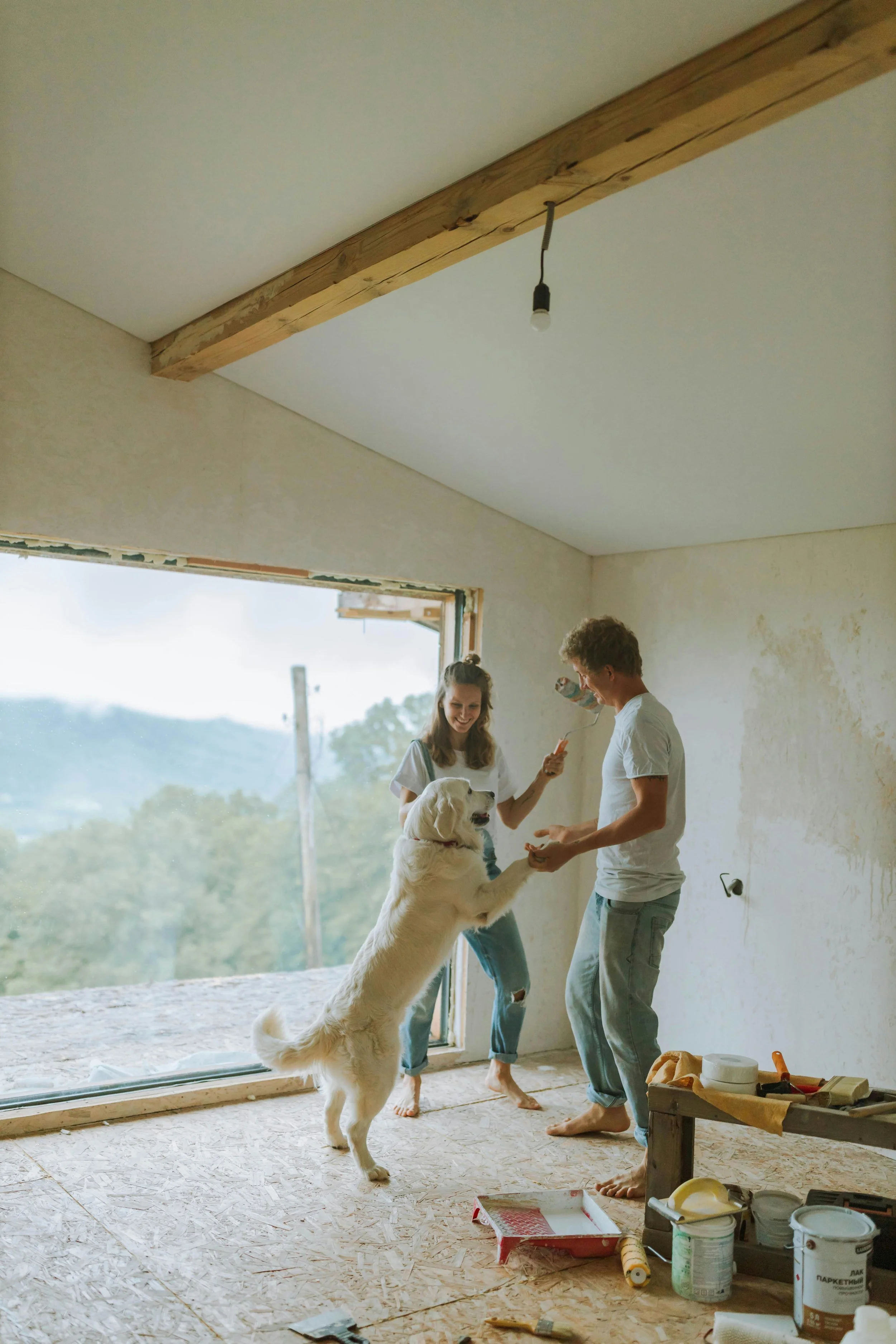
The Gottman Method includes a tool called the stress-reducing conversation, which is perfect for shared trauma. The rule is that no problem-solving occurs until both parties feel understood. Couples hate this rule at first. They fear that without solutions, the pain will last forever. In practice, once both feel heard, solutions come faster and are less reactive. Over several weeks, the couple builds confidence that they can talk about painful chapters without tearing the pages out.
Practical markers of progress
Progress in trauma therapy and narrative repair is not just fewer nightmares. It is the way life begins to regain range. I ask clients to track three domains: symptoms, function, and meaning. Symptoms include sleep, panic frequency, startle response, and dissociation. Function includes work attendance, social contact, and participation in family routines. Meaning includes self-talk, hopefulness, and willingness to plan for the future. When two of the three move in a positive direction for several weeks, the arc is good, even if one lags.
Numbers help. A log might show panic attacks dropping from daily to weekly in six weeks, or date nights climbing from zero to two per month by the end of the quarter. These data points are not trophies, they are feedback. If sleep stalls under six hours for a month, we pivot. If couples report that repair attempts work 30 percent of the time, we aim for 50 percent within the next four sessions. Concrete targets de-mystify change.
When the story starts to breathe
The most reliable sign of successful narrative repair is not that the past disappears. It is that the present expands. A client who once avoided crowded spaces tries a farmer’s market and comes home with strawberries. A couple who only spoke in sarcasm shares one tender sentence at bedtime. A physician with the hummingbird part closes her laptop at 7 p.m. And walks her dog on streets she used to avoid. These are not minor moments. They are new paragraphs in a story that used to end too soon.
I often ask, near the middle of therapy, What would you like the next chapter title to be. Answers vary. Less scared. More honest. Trusting myself. Laughing again. The phrase becomes a north star. When a choice arises, we can ask if it serves that title. The nervous system likes rehearsed moves. Naming the chapter helps the brain pre-load the pattern we want to strengthen.
There will be lapses. A trigger will land with more force than expected. The instinct might be to declare that nothing worked. That is part of the old story trying to reclaim the pen. In those moments, we return to the basics. Ground, orient, breathe, reach out. Then we re-read the last few months with a fair lens. Most of the time, you will see that progress has not vanished, it has merely dipped. That recognition restores agency, which is the heart of repair.
How different approaches blend rather than compete
Clients often ask whether they should choose IFS therapy, anxiety therapy, or a more traditional trauma therapy. The better answer is usually both, arranged to fit the person. For someone with intense panic, we may prioritize anxiety skills first, then move to IFS to work with protector parts, then use narrative techniques to reframe meaning. For a couple struggling after betrayal, we https://telegra.ph/Couples-Therapy-for-Sexual-Mismatch-Desire-Discrepancy-Solutions-05-12 may start with Gottman Method structures to stabilize communication, then add individual sessions for trauma processing, then return to couple work to coauthor a shared future.
Trade-offs are real. Deep memory work can leave a person raw for a day or two, which might conflict with an intense work schedule. Couples therapy can increase conflict temporarily as patterns surface. I am candid about those costs. We then plan buffers, such as scheduling difficult sessions on afternoons before lighter days, or agreeing on stricter time boundaries during early couple work to limit escalation. Judicious pacing prevents the process from overshadowing life.
A closing word on dignity
Narrative repair is ultimately a dignity project. Trauma often steals the benefit of the doubt from the self. People come to see their courage as recklessness, their sensitivity as weakness, their boundaries as selfishness. Through careful work, those same qualities can be returned to their rightful names. Courage is courage. Sensitivity is attunement. Boundaries are clarity about what keeps love intact.
If you are in therapy now, notice the small edits in your story. Maybe the all-or-nothing language has softened. Maybe you apologize less for having needs. If you are considering starting, know that the work will ask something of you, and it will give something back. A fuller breath. A kinder inner voice. A relationship that can handle hard days without breaking.
Rewriting a story does not erase the old chapters. It places them in context, then invites new ones to be written while your hands are steady and your eyes are open. That is repair. That is freedom taken one sentence, one session, and one day at a time.
Address: 7 4th Street, Suite 3, Petaluma, CA 94952
Phone: 707-634-4927
Website: https://www.elizabethhardingtherapy.com/
Email: [email protected]
Hours:
Sunday: Closed
Monday: 9:00 AM – 7:00 PM
Tuesday: 9:00 AM – 7:00 PM
Wednesday: 9:00 AM – 7:00 PM
Thursday: 9:00 AM – 7:00 PM
Friday: Closed
Saturday: Closed
Primary services: Individual therapy, couples therapy, anxiety therapy, trauma therapy, Internal Family Systems (IFS)-informed therapy, Gottman Method-informed couples work
Service delivery: In-person sessions in downtown Petaluma and telehealth throughout California
Service area: Petaluma, Sonoma County, Marin County, and telehealth throughout California
Open-location code (plus code): 69M5+7R Petaluma, California, USA
Map/listing URL: https://www.google.com/maps/place/Elizabeth+Harding+LMFT/@38.2332413,-122.6403852,17z/data=!3m1!4b1!4m6!3m5!1s0x8085b7d1466955ed:0xf885973e87296553!8m2!3d38.2332413!4d-122.6403852!16s%2Fg%2F11y_dtpl9h
Embed iframe:
The practice supports people dealing with anxiety, relationship strain, life transitions, depression, trauma-related patterns, communication difficulties, and self-esteem concerns.
In-person sessions are offered in downtown Petaluma, and telehealth helps clients across Sonoma County, Marin County, and the rest of California stay consistent with care.
The clinical approach is informed by Attachment Theory, Internal Family Systems, trauma-informed care, and Gottman Method training for couples work.
This practice is a good fit for people who want a thoughtful, direct, relationship-centered therapy process instead of a one-size-fits-all approach.
Clients can ask about individual therapy, couples therapy, anxiety therapy, trauma therapy, insurance, fees, or format options during a free 20-minute phone or video consultation.
To get started, call 707-634-4927 or visit https://www.elizabethhardingtherapy.com/ to request a consultation and review service details.
For local map reference, the business also maintains a public Google listing tied to the Petaluma office at 7 4th Street, Suite 3.
Popular Questions About Elizabeth Harding, LMFT
Do you offer in-person or telehealth therapy?
Both. Elizabeth Harding offers in-person sessions in downtown Petaluma and telehealth sessions for clients located anywhere in California.
Who does Elizabeth Harding work with?
The public site says she works with adolescents, teens, adults, and couples.
What issues does this practice focus on?
Public pages describe support for anxiety, relationship challenges, life transitions, depression, trauma-related concerns, self-esteem, communication difficulties, and related emotional or relational patterns.
What therapy approaches are used?
The site says the work is primarily influenced by Attachment Theory and Internal Family Systems, includes a trauma-informed lens, and draws on Gottman Level 1 training for couples work.
How much does therapy cost?
Public pages list sessions at $140, and the site also says a limited number of sliding-scale spots may be available.
Do you accept insurance?
Yes. The fees page says the practice is in-network with plans under the Aetna and Optum umbrella, including UnitedHealthcare, Oscar, Oxford, UMR, Meritain, and others.
Is there a consultation for new clients?
Yes. The contact page says Elizabeth Harding offers a free 20-minute phone or video consultation.
How can I contact Elizabeth Harding, LMFT?
Call tel:+17076344927, email [email protected], and visit https://www.elizabethhardingtherapy.com/.
Landmarks Near Petaluma, CA
Historic Downtown Petaluma: A practical reference point for clients who live or work near the city center. If you are near downtown, in-person therapy is available locally and telehealth is available statewide. https://petalumadowntown.com/
Petaluma River Turning Basin: One of downtown Petaluma’s best-known landmarks and a useful anchor for local service-area copy. If you are near the Turning Basin, the office is close by and telehealth remains an option for added flexibility. https://cityofpetaluma.org/visiting-turning-basin/
Petaluma Downtown SMART Station: A strong transit reference point for clients commuting from nearby Sonoma or Marin communities. If you are near the downtown station, the practice is positioned well for Petaluma-based sessions and statewide telehealth. https://www.sonomamarintrain.org/stations
Petaluma Theatre District: A recognizable downtown district that helps anchor location copy for central Petaluma. If you spend time around the Theatre District, the practice offers a convenient local option for therapy. https://theatre-district.com/
Petaluma Adobe State Historic Park: A well-known local landmark east of town and a useful service-area reference for broader Petaluma coverage. If you are near the Adobe area, in-person care in Petaluma and telehealth across California are both available. https://www.parks.ca.gov/?page_id=22729
Helen Putnam Regional Park: A familiar southwest Petaluma landmark for residents who want local relevance without keyword stuffing. If you are near Helen Putnam Regional Park, the practice serves Petaluma with both office-based and remote options. https://parks.sonomacounty.ca.gov/visit/find-a-park/helen-putnam-regional-park
Lucchesi Park: A popular east-side Petaluma park that works well as a neighborhood reference point. If you are near Lucchesi Park or the hospital area, the practice remains accessible for local therapy support. https://cityofpetaluma.org/lucchesi-park/
Petaluma Fairgrounds: A practical city landmark for central Petaluma coverage pages and event-oriented areas of town. If you are near the fairgrounds, the practice offers a nearby Petaluma option plus telehealth for ongoing convenience. https://cityofpetaluma.org/fairgrounds/